

The Fallacy of the Hidden Entity: Aphorism 13 and the Critique of Materialistic Medicine
Aphorism 13: The Fallacy of the Hidden Entity: Aphorism 13 and the Critique of Materialistic Medicine In the progression of the Organon of Medicine, Samuel Hahnemann has already established that health is a state of dynamic harmony and disease is a “spirit-like” derangement of the vital force. In Aphorism 13, he delivers a sharp philosophical […]
Bridging the Chasm: The Mathematical Certainty of Homoeopathic Cure
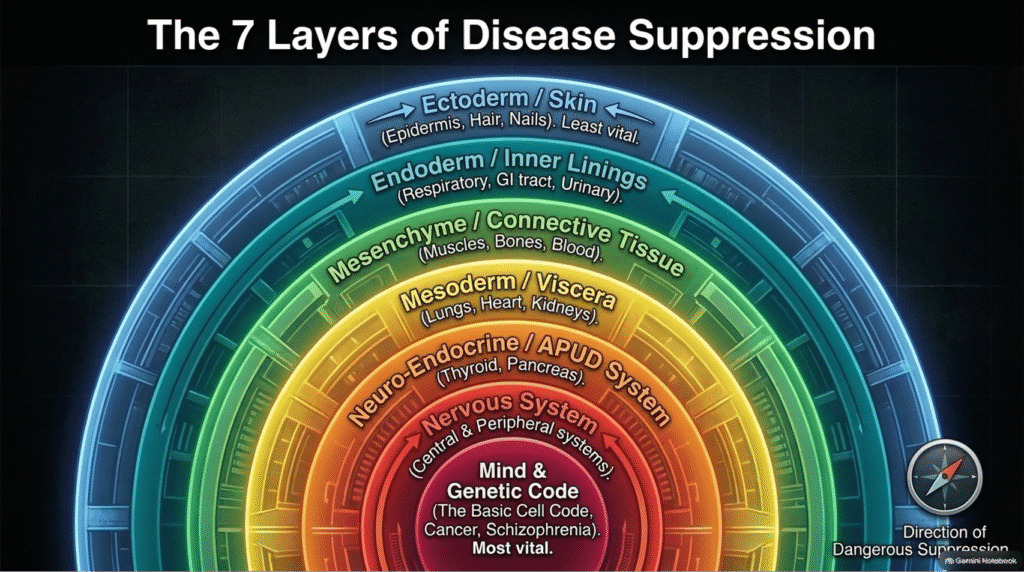
Theory of Suppression by Dr Prafull Vijayakar explores the mathematical and biological laws governing the progression and recovery of illness. Dr. Vijayakar argues that modern medical practices often merely mask symptoms, a process he calls suppression, which inadvertently drives disease deeper into more vital internal organs. By categorizing the human body into seven distinct layers […]
The Evidence of the Invisible: Aphorism 12 and the Proof of Cure
Aphorism 12: The Evidence of the Invisible: Aphorism 12 and the Proof of Cure In Samuel Hahnemann’s philosophical framework, life is sustained and governed by a spiritual vital force. In Aphorism 12, he explains that this same force is the sole producer of disease. Disease as a Dynamic Derangement It is the morbidly affected vital […]
The Dynamic Root of Sickness: Understanding Aphorism 11
Aphorism 11: The Dynamic Root of Sickness: Understanding Aphorism 11 In Samuel Hahnemann’s exploration of life and health, he has already established that a spiritual Vital Force is the invisible conductor of our physical being. In Aphorism 11, he takes this concept to its logical conclusion: when a person falls ill, it is not their […]
The Spark of Life: Aphorism 10 and the Dependency of the Material Organism
Aphorism 10: The Spark of Life: Aphorism 10 and the Dependency of the Material Organism In Aphorism 9, Samuel Hahnemann introduced the spiritual vital force as the invisible conductor of health. In Aphorism 10, he deepens this concept by explaining that without this animating power, the material body is nothing more than inert matter. This […]
The Invisible Conductor: Aphorism 9 and the Spirit-Like Vital Force
Aphorism 9: The Invisible Conductor: Aphorism 9 and the Spirit-Like Vital Force In the opening principles of the Organon of Medicine, Samuel Hahnemann focused on the physician’s mission and the standard for a true cure. In Aphorism 9, he shifts his focus to the very nature of life itself. He introduces the central pillar of […]
The Logic of Health: Aphorism 8 and the End of Disease
Aphorism 8: The Logic of Health: Aphorism 8 and the End of Disease Following the principles established in the preceding sections, Samuel Hahnemann uses Aphorism 8 to deliver a final, logical blow to the medical theories of his day. This aphorism serves as the ultimate conclusion to his argument: if the physician has correctly identified […]
The Physician’s Compass: Aphorism 7 and the Totality of Symptoms
Aphorism 7: The Physician’s Compass: Aphorism 7 and the Totality of Symptoms Building upon the definition of the “unprejudiced observer” in Aphorism 6, Samuel Hahnemann uses Aphorism 7 to provide practitioners with a practical compass for clinical practice. This principle establishes the totality of symptoms as the only reliable guide for selecting a curative remedy […]
The Unprejudiced Observer: Aphorism 6 and the Portrait of Disease
Aphorism 6: The Unprejudiced Observer: Aphorism 6 and the Portrait of Disease In the sixth aphorism of the Organon of Medicine, Samuel Hahnemann defines the essential mindset and methodology of the true healer. He argues that for medicine to be a “science of certainty,” the physician must move away from the “futility of transcendental speculations” […]
The Detective Work of Healing: Aphorism 5 and the Search for Causes
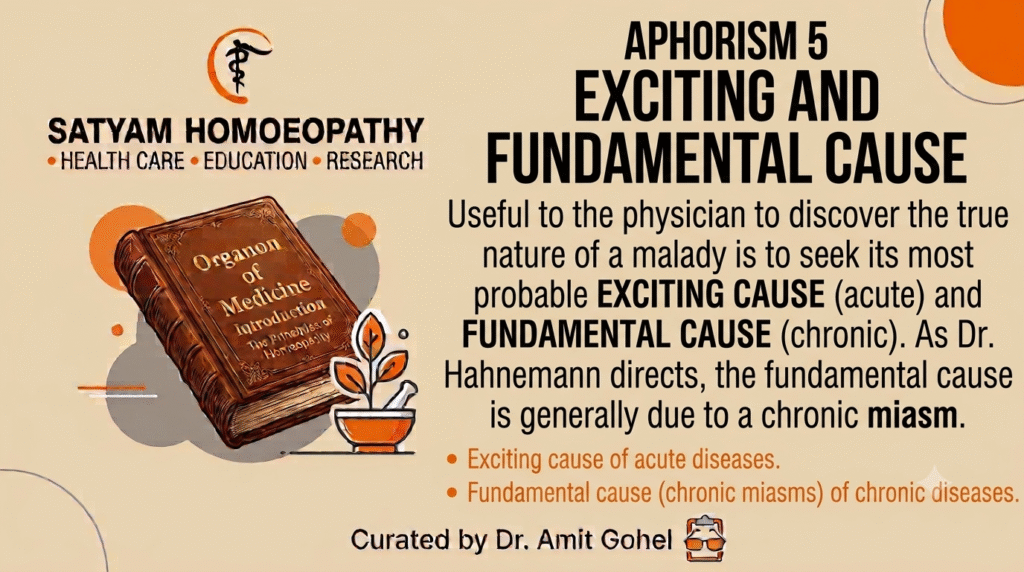
Aphorism 5: The Detective Work of Healing: Aphorism 5 and the Search for Causes Having established the physician’s mission to cure and the necessity of being a “preserver of health,” Samuel Hahnemann moves into the practicalities of diagnosis in Aphorism 5. If the previous principles provided the “what” and the “why,” this aphorism begins to […]
